
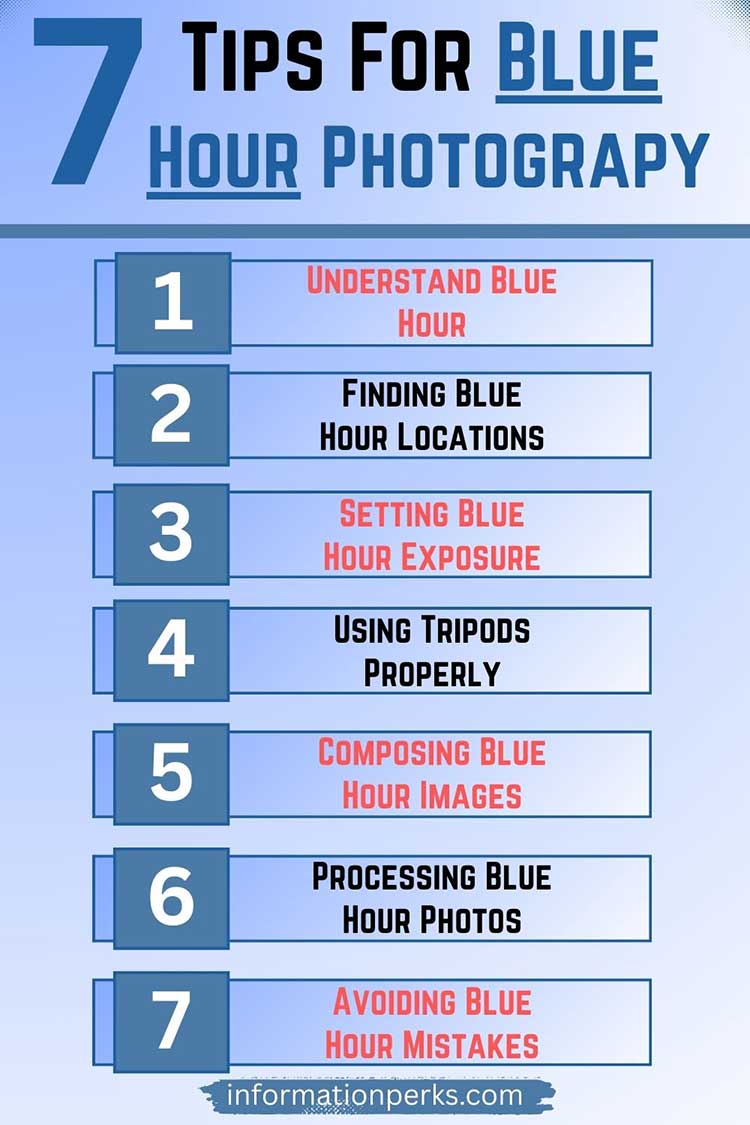
7 Tips For Blue Hour Photography is a practical guide that helps photographers plan timing, control exposure, and use composition to capture calm color and balanced light during the brief blue hour. It emphasizes patience and deliberate shooting to create clean, atmospheric images.
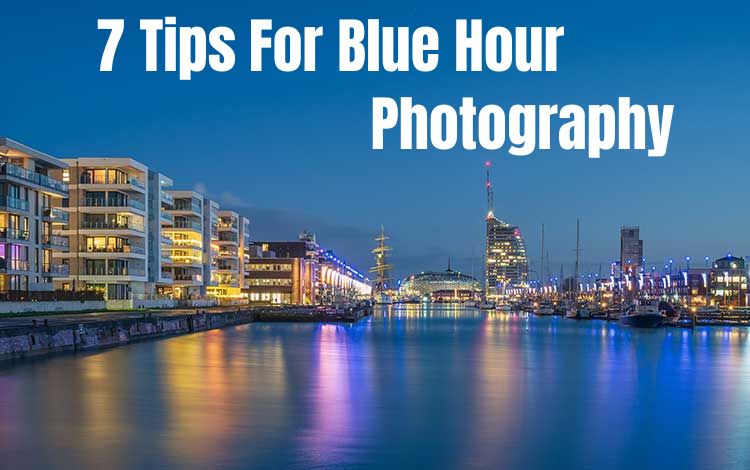
Key Takeaways – 7 Tips For Blue Hour Photography
- Plan your timing carefully by checking sunrise and sunset charts, since blue hour lasts only a short time and changes quickly.
- Arrive early and observe the light so you can recognize the best balance between sky color and scene brightness.
- Use a tripod for stability to keep images sharp as shutter speeds slow during fading light.
- Control exposure deliberately by adjusting shutter speed first and keeping ISO as low as possible for clean color.
- Watch artificial lights closely to avoid blown highlights while maintaining rich blue tones in the sky.
- Compose with intention by using foreground elements and clean lines to guide the viewer through the frame.
- Edit gently in post-processing to preserve natural color, smooth transitions, and the calm mood of blue hour.
7 Tips For Blue Hour Photography
Capturing a scene as day slips into night often feels elusive. You arrive hopeful, yet the light changes fast, colors deepen suddenly, and results rarely match what your eyes experienced.
This article explains how blue hour works and why timing, exposure control, composition, and steady technique matter when light fades quickly but offers remarkable color and mood.
Before you begin, take your time and think intentionally. Blue hour rewards preparation more than speed, and these tips will help you approach it with clarity, confidence, and practical control.
1. Understanding Blue Hour
One-sentence explanation: When you understand blue hour, you can predict the light and capture calm color, gentle contrast, and a beautiful sense of atmosphere.
A. Watching Light Change
Blue hour shows up shortly before sunrise or after sunset, when the sky turns a rich, deep blue. The light shifts fast, so pay attention to how brightness and color change every few minutes. Early blue hour often looks darker, and city lights stand out with strong contrast. Later, the light softens and shadows open up, which suits landscapes and nature scenes.
I like to arrive early and simply watch for a moment before I shoot. That quick pause helps you notice when the sky and the scene feel balanced. Once you spot that “sweet spot,” your decisions feel easier, and you shoot with more confidence.
B. Timing It Right
Use a sunrise and sunset chart to plan your timing, because blue hour does not last long. You will usually get a longer blue hour in winter and a shorter one in summer. In cities, earlier blue hour often looks best because streetlights and windows still glow strongly. Along coasts or in the country, the later part can feel smoother as shadows lift and the scene looks more even.
I try to pick my composition before blue hour begins. That way, when the color arrives, I focus on exposure and timing instead of rushing around. Good timing keeps the session calm and helps you get consistent results.
2. Finding Blue Hour Locations
One-sentence explanation: Great locations give your blue hour photos structure, context, and clear visual anchors that keep the viewer interested.
A. Choosing Urban Scenes
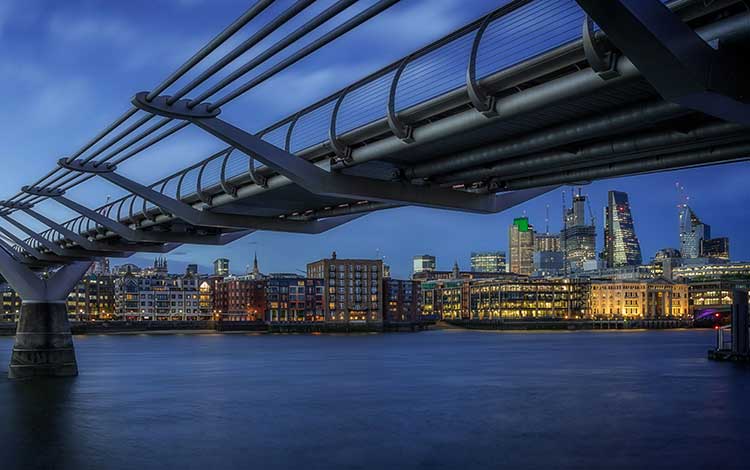
Cities look fantastic during blue hour because artificial lights add warmth and depth. Bridges, skylines, and streets create strong lines and shapes against the blue sky. Reflections on glass, wet pavement, or water can boost color and mood. If you can find a higher viewpoint, you often get a cleaner, more organized frame.
I recommend scouting city spots in daylight first. You can choose angles, avoid clutter, and plan where to stand. When blue hour arrives, you won’t waste time searching, and you’ll feel much more relaxed.
B. Exploring Natural Scenes
Natural locations feel quiet and cinematic during blue hour. Coastlines, lakes, and mountains benefit from the softer light and reduced contrast. Water can reflect the sky color and add an extra layer of interest. Foreground shapes matter here, because they help the photo feel deep instead of empty.
I try not to shoot a plain horizon with nothing in front of it. A rock, a tree, or a shoreline curve gives the frame balance. Simple anchors like these make your images feel more intentional.
3. Setting Blue Hour Exposure
One-sentence explanation: The right exposure keeps blue hour color rich, protects highlights, and controls shadows while the light changes quickly.
A. Balancing Shutter Speed
Shutter speed controls both brightness and motion during blue hour. As the light fades, longer exposures help you keep the scene bright without pushing ISO too hard. Slower shutters can also soften moving water and drifting clouds, which adds a calm, polished look. Because the light drops fast, you will need to adjust your shutter speed often.
I check my histogram instead of trusting the back screen. Screens can look brighter or darker than reality. The histogram helps you protect highlights and hold onto that clean blue tone.
What are the best blue hour shutter speeds for hand-held and tripod cameras?
For tripod use, blue hour shutter speeds often range from several seconds to around one second, depending on light levels and ISO. Slower speeds allow clean exposure and smooth color as the sky darkens. A tripod lets you work patiently and adjust shutter speed gradually as conditions change.
For hand-held shooting, aim for shutter speeds faster than 1/30 second to reduce camera shake. Use wider apertures and slightly higher ISO to maintain exposure. Shoot early in blue hour when light remains brighter and review images often to maintain sharpness.
B. Managing ISO Choices
Keep ISO as low as you reasonably can. Blue hour often includes smooth color transitions, and low ISO helps you keep those tones clean. Higher ISO brings more noise, and noise can make skies look rough and blotchy. A tripod makes this easier because it allows slower shutter speeds with low ISO.
I only raise ISO when I truly need a faster shutter. Sharp details and smooth color usually matter more than speed at blue hour. When you slow down, image quality often improves.
4. Using Tripods Properly
One-sentence explanation: A tripod gives you stability and control so you can work slowly and confidently as the light fades.
A. Stabilizing the Camera
A sturdy tripod helps prevent blur when you use slower shutter speeds. Extend the thicker leg sections first, because they provide better support. Try not to raise the center column unless you must, since it can reduce stability. If wind picks up, place the tripod carefully and consider adding weight for extra support.
I gently press the tripod feet into the ground when the surface feels soft. This small step helps reduce movement. Little habits like this often make the difference between sharp and slightly soft images.
B. Refining Your Workflow
Use a remote release or your camera’s timer to avoid shaking the camera when you press the shutter. Turn off image stabilization when the camera sits on a tripod, because it can cause blur in some situations. Recheck your framing after adjustments, since tiny shifts become obvious at slower shutter speeds.
I move slowly during blue hour because everything feels more sensitive. Quick tripod changes often cause crooked horizons and framing mistakes. When you work deliberately, you get sharper images and a smoother shooting experience.

5. Composing Blue Hour Images
One-sentence explanation: Thoughtful composition helps your blue hour photos feel balanced, deep, and easy to look at.
A. Using Excellent Foregrounds
Foreground elements guide the viewer into the scene. Rocks, rails, reflections, and shoreline textures add depth and make the image feel layered. They also prevent the bottom of the frame from looking empty, especially with wide-angle views. Even small foreground details can help.
I often crouch or take a step sideways to improve placement. Tiny movements can change alignment and balance. When the foreground feels intentional, the whole image looks stronger.
B. Balancing Light Sources
Artificial lights can easily overpower the blue sky if you let them blow out. Try to balance warm lights with cool tones, so the scene feels natural and pleasing. Watch for clipped highlights in street lamps, windows, and signs. A calm blue hour look usually comes from good light balance.
I expose for the brightest areas first, then lift shadows if needed. Shadows often recover well, but blown highlights do not. This approach helps the image feel controlled and polished.
6. Processing Blue Hour Photos
One-sentence explanation: Careful editing keeps the blue hour mood while maintaining realistic color and smooth tones.
A. Adjusting Color Balance
White balance has a huge effect on blue hour mood. Cooler settings can emphasize calm and depth, but too much cooling can make the scene look unnatural. Aim for believable blues that still leave room for warm lights and natural skin tones, if people appear in the frame.
I make small white balance changes and compare before-and-after views. Presets can push things too far. A gentle touch usually looks best, especially in skies.
B. Enhancing Contrast Gently
Blue hour photos usually look best with subtle contrast. Lift shadows without crushing blacks, and protect highlights to keep light detail. Be careful with clarity and texture, because heavy adjustments can make skies look harsh. Smooth transitions matter during blue hour.
I adjust contrast in small steps and keep checking the sky. Over-editing often ruins that soft, calm feel. Gentle processing respects what blue hour already gives you.
7. Avoiding Blue Hour Mistakes
One-sentence explanation: When you avoid common mistakes, you stay calm and bring home consistent, sharp blue hour images.
A. Rushing the Session
Blue hour can feel stressful because the light changes quickly. Many photographers rush, and that leads to missed focus, sloppy framing, and exposure mistakes. Planning ahead removes most of that pressure. Blue hour rewards patience and simple, steady decisions.
I treat blue hour as a slow sequence of frames. I make one change at a time and watch how the scene responds. That calm approach builds confidence and improves consistency.
B. Ignoring Simple Checks
A quick check can save an entire session. Autofocus can struggle in low light, so confirm sharpness by zooming in on your preview. Recheck your settings after changes, especially shutter speed and ISO. It’s easy to forget one small adjustment and ruin several frames.
I review focus and exposure every few shots. That habit keeps problems small and easy to fix. Simple checks prevent big disappointments later.
Conclusion
Blue hour photography succeeds when you plan carefully, read changing light, and make deliberate exposure and composition choices instead of rushing as the sky darkens.
Apply these principles by arriving early, choosing strong locations, stabilizing your camera, and adjusting settings calmly as light shifts, because small, thoughtful changes shape better results.
On your next shoot, plan a blue hour session, slow your workflow, and practice one or two tips intentionally, then review your images to see how control improves mood and consistency.
Frequently Asked Questions (FAQ)
Q: What is blue hour in photography?
A: Blue hour is the short period before sunrise or after sunset when the sky turns deep blue while ambient light remains soft. This balance allows photographers to capture calm color, controlled contrast, and atmospheric scenes without harsh highlights or shadows.
Q: How long does blue hour last?
A: Blue hour typically lasts between 20 and 40 minutes, depending on season and location. It lasts longer in winter and shorter in summer. Because light changes quickly, photographers should arrive early, prepare compositions, and adjust settings continuously as brightness fades.
Q: What camera settings work best for blue hour photography?
A: Blue hour photography works best with low ISO, slower shutter speeds, and moderate apertures like f/8. These settings preserve clean color, sharp detail, and balanced exposure. A tripod helps maintain sharpness as shutter speeds lengthen during fading light.
Q: Do you need a tripod for blue hour photography?
A: A tripod strongly improves blue hour photography because light levels drop quickly. Slower shutter speeds become necessary to maintain low ISO and clean color. A stable tripod prevents camera shake and allows deliberate composition and exposure adjustments as the light changes.
Q: Why do blue hour photos look better than sunset photos?
A: Blue hour photos often look calmer and more balanced than sunset images because contrast softens and color transitions smooth out. Artificial lights blend naturally with the blue sky, creating depth, mood, and visual harmony that feels less harsh than direct sunset light.
BONUS: Can I Shoot Blue Hour Photos With a Smartphone?
Yes, you can shoot blue hour photos with a smartphone, and many modern phones handle low light surprisingly well. Blue hour works in your favor because light stays soft and contrast remains controlled. Use night mode carefully, keep ISO low if possible, and stabilize the phone to avoid blur.
To improve results, brace your phone against a solid surface or use a small tripod. Tap to set focus and exposure, then lower brightness slightly to protect sky color. Shoot early in blue hour when light levels stay higher, and review images often as conditions change.

iPhone Photography Accessories
BONUS: What Aperture Should You Use for Blue Hour Photography?
For tripod use, the best blue hour aperture settings usually range from f/8 to f/11. This range provides strong sharpness and consistent depth of field while allowing slower shutter speeds as light fades. A tripod removes camera shake concerns, so you can prioritize image quality and controlled exposure.
For hand-held shooting, wider apertures like f/2.8 to f/5.6 often work better. These settings allow faster shutter speeds to reduce motion blur as light drops. Balance aperture with ISO carefully, and shoot earlier in blue hour when light levels remain higher.
BONUS: What ISO Setting Is Best for Blue Hour Photography?
For tripod use, the best blue hour ISO settings usually sit at ISO 100 or ISO 200. Low ISO preserves clean color, smooth gradients, and fine detail as light fades. A tripod allows slower shutter speeds, so you can keep ISO low while maintaining accurate exposure.
For hand-held shooting, ISO often needs to rise to ISO 400 or ISO 800 to support faster shutter speeds. Increase ISO gradually and stop once noise becomes noticeable. Shoot earlier in blue hour to keep ISO lower and image quality higher.
BONUS: Is Manual Mode Better Than Aperture Priority for Blue Hour?
Manual mode often works better during blue hour because light levels change quickly and unpredictably. Manual settings let you control aperture, shutter speed, and ISO without the camera constantly shifting exposure. This control helps maintain consistent brightness and color as the sky darkens.
Aperture priority can still work if you monitor exposure closely. The camera may underexpose as light fades, which forces frequent exposure compensation. Many photographers start in aperture priority, then switch to manual once light changes accelerate and consistency becomes more important.