
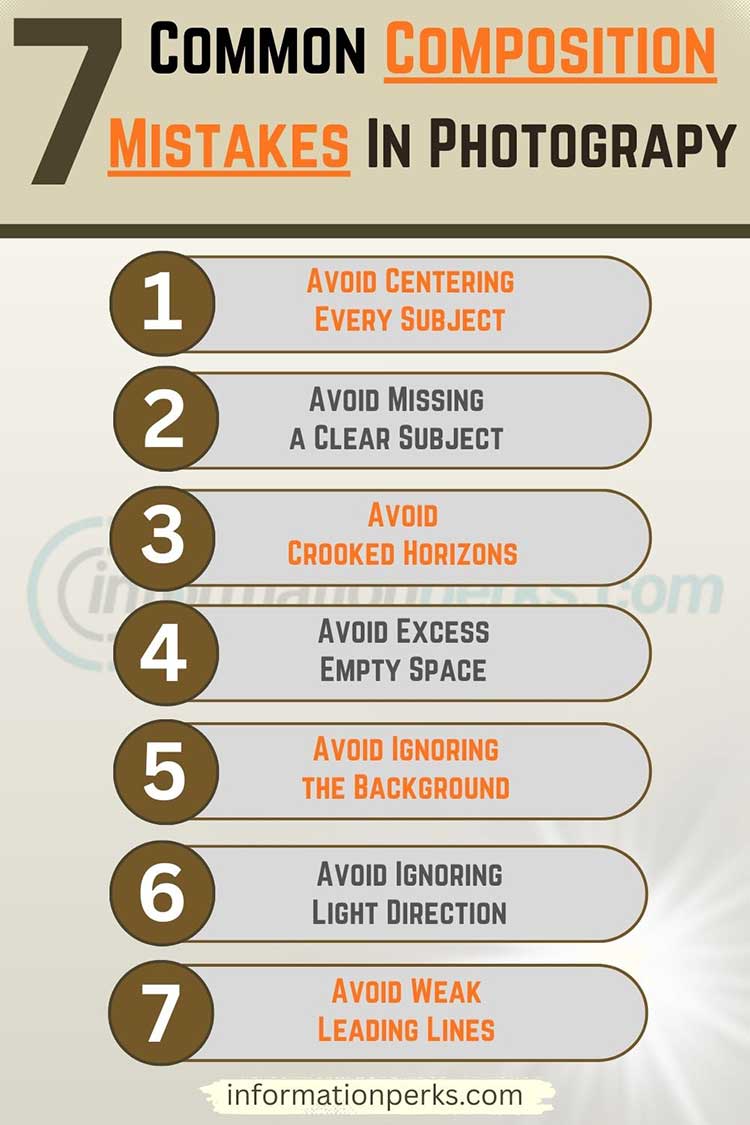
7 Common Composition Mistakes in Photography describe recurring framing errors that weaken visual clarity and viewer engagement by misplacing subjects, misusing space, or ignoring light and structure. These mistakes often occur because photographers rush composition or fail to guide the viewer’s eye deliberately.

Key Takeaways – 7 Common Composition Mistakes
- Centering every subject weakens impact — Off-center placement adds movement, tension, and visual interest to photographs.
- Photos need a clear subject — A defined focal point tells viewers where to look and what matters.
- Crooked horizons distract viewers — Straight horizons create stability and make images feel intentional.
- Too much empty space reduces clarity — Negative space should support the subject, not overwhelm it.
- Backgrounds shape subject strength — Clean backgrounds help subjects stand out and improve visual clarity.
- Light direction controls mood and depth — Side, front, and back lighting change how form and texture appear.
- Leading lines must guide the eye — Strong lines direct attention toward the subject and improve flow.
7 Common Composition Mistakes in Photography
When I first picked up a DSLR, my exposures improved quickly, but my photos still felt flat and confusing. I centered everything, ignored backgrounds, and wondered why strong light never saved weak compositions. Those mistakes taught me that composition shapes how photographs communicate.
This article explains why common composition mistakes appear so often and how they quietly undermine otherwise good photographs. You will learn how subject placement, framing, balance, and light direction influence clarity, flow, and viewer engagement in everyday shooting situations.
As you read, think about how you normally frame a scene before touching the camera. These ideas will help you slow down, see more clearly, and make deliberate compositional choices that improve every photograph you take.
1. Avoid Centering Every Subject
Placing every subject in the center often flattens a photograph and limits visual movement, reducing the viewer’s sense of engagement and exploration.
A. Shift Subject Placement
Many beginners center subjects because it feels safe and balanced, but this habit often creates static images. Shifting the subject slightly left or right introduces visual tension and encourages the eye to travel through the frame. This simple change adds energy without complicating the scene.
Using tools like the rule of thirds helps guide subject placement naturally. When you position a subject off-center, surrounding elements gain meaning and support the story. Over time, this approach trains your eye to recognize stronger compositions before pressing the shutter.
B. Use Visual Balance
Off-center placement works best when the frame still feels balanced. Visual balance comes from distributing visual weight using light, color, shapes, or secondary elements. A small subject can feel balanced if a contrasting background or leading element supports it.
As you compose, scan the frame edges and background areas. Ask whether anything competes with or complements your subject. When balance feels intentional rather than accidental, the photograph appears confident, structured, and visually satisfying without relying on perfect symmetry.

2. Avoid Missing a Clear Subject
Every strong photograph needs a clear subject, because viewers should instantly understand what the image is about and where their attention belongs.
A. Define the Subject
Before raising the camera, decide exactly what the photograph is about. The subject might be a person, an object, a shape, or even a specific area of light. When you define the subject first, your framing and exposure choices become more deliberate and controlled.
Clear subject definition also improves emotional impact. Viewers connect more easily when one element clearly leads the image. If you find yourself unsure what the subject is while composing, that uncertainty usually appears in the final photograph.
B. Simplify the Frame
A clear subject often disappears when the frame contains too many competing elements. Simplifying the frame helps the subject stand out and strengthens visual communication. This may involve changing position, zooming in, or waiting for distractions to move out of the scene.
Pay close attention to edges, backgrounds, and overlapping shapes. Small adjustments can remove visual clutter and restore clarity. When everything in the frame supports the subject, the photograph feels intentional, calm, and easier to read.

3. Avoid Crooked Horizons
A crooked horizon distracts the viewer and makes even well-exposed, well-lit photographs feel rushed or careless.
A. Level the Horizon
A level horizon provides visual stability and helps scenes feel calm and intentional. When the horizon tilts unintentionally, the viewer’s eye keeps correcting the imbalance instead of engaging with the subject. This distraction weakens the overall impact of the photograph.
Use your camera’s gridlines or electronic level whenever possible. These tools make it easier to spot slight tilts in real time. With practice, your eye will naturally recognize when a horizon feels off before you press the shutter.
B. Check the Edges
Crooked horizons often slip in because photographers focus only on the center of the frame. Checking the frame edges helps catch subtle slopes caused by uneven foregrounds, rolling terrain, or hurried shooting. This habit becomes essential in landscape and seascape photography.
Take a brief pause before shooting and scan left to right. Look for horizontal reference lines such as waterlines, buildings, or distant landforms. This quick check prevents small alignment errors that are difficult to ignore later.

4. Avoid Excess Empty Space
Too much empty space can weaken a photograph by reducing subject impact and breaking the visual connection between elements in the frame.
A. Control Negative Space
Negative space works best when it supports the subject rather than overwhelms it. When used deliberately, empty areas help isolate the subject and create a clean, calm visual flow. When overused, they can make the subject feel lost or insignificant.
As you compose, consider whether the empty space adds mood, scale, or direction. If it does not serve a purpose, it likely works against the image. Intentional negative space should feel balanced, not accidental.
B. Crop with Purpose
Purposeful cropping strengthens composition by removing areas that do not contribute to the story. Stepping closer or zooming in often improves clarity and emphasis. Cropping helps you guide attention instead of leaving the viewer searching.
Review the edges of your frame carefully before shooting. Ask whether each area supports the subject. When every part of the frame has a reason to exist, the photograph feels tighter, clearer, and more confident.

5. Avoid Ignoring the Background
A distracting background competes with the subject and can quickly undermine an otherwise well-composed photograph.
A. Simplify the Background
Great photographs separate the subject from the background clearly. Busy or cluttered backgrounds pull attention away and confuse the viewer. By choosing a cleaner angle or waiting for distractions to move, you can strengthen subject emphasis without changing camera settings.
Look for plain surfaces, distant scenery, or consistent tones behind your subject. Even small shifts in position can remove unwanted elements. A simple background allows the subject to stand out with clarity and purpose.
B. Use Depth Control
Depth of field plays a major role in background control. Wider apertures, longer focal lengths, and increased subject distance help soften backgrounds and reduce visual noise. This separation draws attention naturally to the subject.
Depth control works best when combined with thoughtful positioning. Move your subject away from the background whenever possible. When blur and composition work together, the image feels intentional and visually refined.

6. Avoid Ignoring Light Direction
Light direction shapes depth, texture, and mood, making it one of the most important compositional decisions in photography.
A. Observe Light Angle
The angle of light determines how a subject appears in the frame. Side lighting reveals texture and form, backlighting creates separation and mood, and front lighting reduces shadows but can flatten details. Each direction tells a different visual story.
Before shooting, pause and study how light falls across the subject. Move slightly and watch how shadows change. This awareness helps you choose angles that enhance shape and visual interest rather than diminish them.
B. Position the Subject
You often gain better light by moving yourself or repositioning the subject instead of adjusting camera settings. Turning a subject toward the light can improve facial definition, while shifting your position can avoid harsh shadows or glare.
Good light rarely happens by accident. Actively placing the subject in relation to the light source gives you control over contrast and mood. When light direction works with composition, photographs feel deliberate and visually strong.

7. Avoid Weak Leading Lines
Strong leading lines guide the viewer’s eye through the frame, while weak or misplaced lines confuse movement and reduce visual flow.
A. Find Natural Lines
Leading lines appear naturally in many scenes, including roads, fences, shadows, rivers, and architectural edges. When you recognize these lines, you can use them to direct attention toward the subject instead of letting them drift aimlessly through the frame.
Train your eye to look for lines before you look for subjects. Once you see them, adjust your position to strengthen their direction. Effective lines feel purposeful and guide the viewer smoothly into the image.
B. Direct the Viewer
Leading lines work best when they point clearly toward the subject or a meaningful area of the frame. Lines that lead out of the image or stop abruptly weaken composition and visual clarity. Direction matters more than presence.
As you compose, ask where the line begins and where it ends. Subtle camera movements often improve alignment. When lines reinforce subject placement, the photograph feels structured, intentional, and visually engaging.
Conclusion
Great composition rarely comes from complex techniques or expensive equipment. It comes from avoiding small, repeatable mistakes that quietly weaken otherwise good photographs. When you control subject clarity, balance, light, and direction, your images communicate more clearly and feel intentional.
Apply these ideas by slowing down before each shot. Scan the frame edges, check the background, and consider how light and lines guide the viewer’s eye. These habits improve decision-making and help you see stronger compositions in real time.
Take your camera out and practice one correction at a time. Review your images critically, adjust, and shoot again. Consistent awareness builds confidence, sharpens vision, and steadily improves every photograph you make.
Frequently Asked Questions (FAQ)
Q: What is the most common composition mistake in photography?
A: Centering the subject too often ranks as the most common mistake. It creates static images and limits visual movement. Off-center placement using balance or the rule of thirds helps guide the viewer’s eye and adds depth and interest to photographs.
Q: Why do my photos look cluttered or confusing?
A: Photos look cluttered when they lack a clear subject or include too many competing elements. Simplifying the frame, controlling backgrounds, and clearly defining the subject helps viewers understand the image quickly and improves visual clarity and impact.
Q: How important is the background in composition?
A: The background plays a major role in composition because it either supports or distracts from the subject. Clean, uncluttered backgrounds improve subject separation, while busy backgrounds pull attention away and weaken the photograph’s overall message.
Q: Why do crooked horizons look so bad in photos?
A: Crooked horizons disrupt visual balance and create discomfort for viewers. Even slight tilts feel unintentional and distracting. Keeping horizons level adds stability, professionalism, and calm to landscape, seascape, and architectural photographs.
Q: How do leading lines improve composition?
A: Leading lines guide the viewer’s eye through the frame toward the subject. Roads, fences, shadows, or edges work best when they point clearly toward a focal point, strengthening visual flow and helping the image feel intentional and structured.

BONUS: Why is centering the subject the most common mistake in photography?
Many photographers center subjects because the camera viewfinder encourages symmetry and speed. This habit reduces visual movement and prevents the eye from exploring the frame. Centered compositions can work, but constant use removes tension and weakens storytelling.
Off-center placement forces photographers to think about balance, space, and relationships. When you shift the subject, surrounding elements gain purpose and guide attention naturally. This simple change improves composition awareness and helps images feel intentional rather than accidental.
BONUS: What is the idea behind leading lines in photograph?
Leading lines use natural or man-made lines to guide the viewer’s eye through a photograph toward a subject or point of interest.
Leading lines work by creating visual direction and flow within the frame. Roads, paths, fences, shadows, rivers, and architectural edges naturally pull the eye forward. When you align these lines deliberately, they help viewers move through the image instead of wandering aimlessly.
Strong leading lines start near the foreground and guide attention inward. Position yourself so lines point toward the subject rather than out of the frame. Diagonal or converging lines often feel more dynamic than horizontal ones. When used intentionally, leading lines add depth, structure, and visual clarity.
BONUS: When should I avoid shallow depth of field in photography?
Avoid shallow depth of field when the scene relies on context or multiple elements for meaning. Landscapes, environmental portraits, and documentary scenes often need broader focus to show relationships clearly. Excessive blur can remove important details and weaken the story the image should communicate.
Also avoid shallow depth of field when precise focus matters. Group photos, moving subjects, and close-up work demand greater depth to keep key areas sharp. Missed focus becomes obvious at wide apertures. Choosing deeper depth of field improves clarity, reliability, and visual balance.
| Number | Main Point | Practical Tip | Meaning |
|---|---|---|---|
| 1 | Avoid Centering Every Subject | Place your subject slightly off-center using gridlines or natural balance. | Off-center placement creates movement and keeps the viewer’s eye engaged. |
| 2 | Avoid Missing a Clear Subject | Decide what the photo is about before pressing the shutter. | A clear subject gives the image purpose and directs viewer attention. |
| 3 | Avoid Crooked Horizons | Turn on gridlines or use the electronic level in your camera. | Straight horizons create stability and visual comfort. |
| 4 | Avoid Excess Empty Space | Crop tighter or move closer to remove unused areas. | Empty space should support the subject, not weaken its impact. |
| 5 | Avoid Ignoring the Background | Change angle or aperture to reduce background distractions. | Clean backgrounds help the subject stand out clearly. |
| 6 | Avoid Ignoring Light Direction | Walk around the subject to find the most flattering light. | Light direction shapes depth, texture, and mood. |
| 7 | Avoid Weak Leading Lines | Align lines so they point toward the subject. | Strong leading lines guide the viewer’s eye through the image. |