
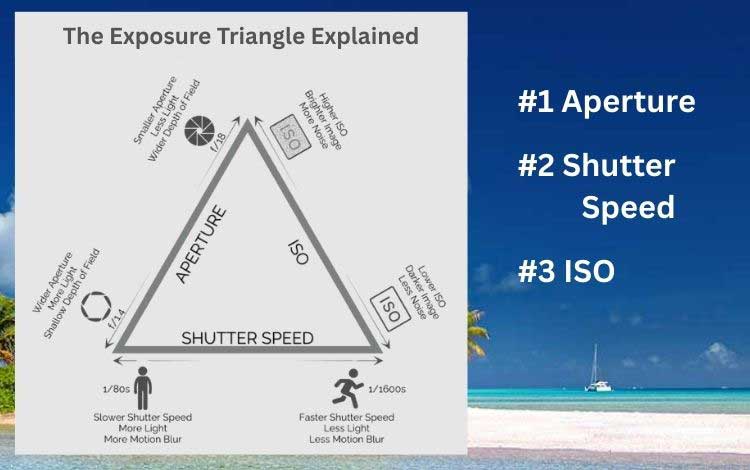
What is the Exposure Triangle in Photography? The exposure triangle in photography explains how aperture, shutter speed, and ISO work together to control image brightness and creative results. Aperture controls light and depth of field, shutter speed controls time and motion, and ISO controls sensor sensitivity. Mastering their balance produces consistent, intentional exposure.
Key Takeaways – What is the Exposure Triangle?
- The exposure triangle explains image brightness by balancing aperture, shutter speed, and ISO in every photograph.
- Aperture controls light and depth of field, affecting background blur and overall scene sharpness.
- Shutter speed controls exposure time and motion, freezing action or creating intentional motion blur.
- ISO controls sensor sensitivity, helping in low light but increasing visible noise at higher values.
- Changing one setting affects the others, requiring balance to maintain proper exposure.
- Strong exposure starts with creative intent, choosing depth of field or motion first.
- Practice builds exposure confidence, making settings predictable and repeatable in real shooting conditions.
What is the Exposure Triangle in Photography?
When I first learned photography, my images looked random despite owning a capable camera. Some photos looked too dark, others too bright, and most felt inconsistent. That confusion pushed me to understand why the camera behaved differently in similar light.
This article explains the exposure triangle and why it sits at the heart of every photograph. You will learn how aperture, shutter speed, and ISO control light, motion, and image quality. Understanding their relationship helps you move from guessing settings to making deliberate creative decisions.
Before diving into each control, it helps to shift how you think about exposure. Instead of isolated settings, you will learn to see exposure as a balance. This mindset prepares you to handle changing light with confidence and clarity.
1. Exposure Triangle Basics
This section explains how aperture, shutter speed, and ISO work together to control brightness and creative results in every photograph.
A. Understanding the 3 Elements
The exposure triangle consists of aperture, shutter speed, and ISO, which together determine how light reaches the camera sensor. Aperture controls the lens opening, shutter speed controls exposure time, and ISO controls sensor sensitivity. Each setting affects brightness, but also changes sharpness, motion, and image quality.
When you adjust one element, you influence more than exposure alone. A wider aperture can blur backgrounds, a faster shutter can freeze action, and a higher ISO can introduce noise. Understanding what each control does helps you predict results instead of guessing settings in the field.
B. Understanding Exposure Balance
Exposure balance means adjusting the three elements so the image looks correctly bright while maintaining creative intent. If you open the aperture for more light, you often need a faster shutter speed or lower ISO to compensate. This balance keeps exposure consistent while changing visual effects.
In real shooting situations, balance helps you make fast decisions. You choose the setting that supports your subject first, then adjust the others to match. This approach builds confidence and helps you stay in control when lighting conditions change quickly.
2. Exposure Aperture Control Explained
This section explains how aperture affects light intake and creative control, helping photographers shape exposure and visual style intentionally.
A. Understanding Aperture Size
Aperture refers to the adjustable opening inside the lens that controls how much light reaches the camera sensor. It is measured in f-numbers, such as f/2.8 or f/11, which describe the size of that opening. Smaller f-numbers mean wider openings and more light entering the camera.
Wider apertures brighten images quickly, which helps in low light or shaded conditions. Smaller apertures reduce light and often require slower shutter speeds or higher ISO values. Knowing how aperture size affects exposure allows you to respond calmly when light levels change.
B. Understanding Depth of Field
Depth of field describes how much of the scene appears sharp from front to back. Wide apertures create shallow depth of field, which isolates subjects by softening backgrounds. Narrow apertures increase depth of field and keep more of the scene in focus.
When you choose an aperture, think beyond brightness. Portrait photographers often favor wider apertures for separation, while landscape photographers prefer smaller apertures for clarity. This choice shapes how viewers experience the image, not just how bright it appears.
3. Exposure Shutter Speed Control
This section explains how shutter speed controls light duration and influences motion, sharpness, and creative timing in photographs.
A. Understanding Exposure Time
Shutter speed refers to how long the camera sensor remains exposed to light. Fast shutter speeds, such as 1/1000 second, allow very little light to reach the sensor. Slow shutter speeds, such as 1/10 second, allow much more light over time.
Short exposure times help in bright conditions and reduce the risk of overexposure. Longer exposure times help in low light but require careful camera handling. Understanding exposure time helps you predict brightness changes before pressing the shutter.
B. Understanding Motion Control
Shutter speed strongly affects how movement appears in an image. Fast shutter speeds freeze action, making them ideal for sports, wildlife, or moving subjects. Slow shutter speeds allow motion blur, which can show movement creatively.
When shooting handheld, shutter speed also affects camera shake. Using speeds too slow can soften images unintentionally. Learning to match shutter speed to subject movement and shooting conditions improves sharpness and creative control.
4. Exposure ISO Sensitivity Explained
This section explains how ISO affects sensor sensitivity, exposure flexibility, and overall image quality.
A. Understanding ISO Sensitivity
ISO measures how sensitive the camera sensor is to light. Low ISO values, such as ISO 100, require more light but deliver cleaner images. Higher ISO values brighten images quickly when light is limited.
Increasing ISO helps maintain usable shutter speeds and apertures in dim conditions. However, ISO should support exposure, not replace good light control. Understanding ISO sensitivity helps you make smart compromises when lighting conditions change.
B. Understanding Image Noise
Image noise appears as grain or speckled texture, especially in darker areas of a photo. Higher ISO values amplify sensor signals, which also amplifies noise. This reduces fine detail and smooth tonal transitions.
Modern cameras handle noise well, but limits still exist. Keeping ISO as low as conditions allow preserves image quality. Knowing when noise becomes noticeable helps you decide when higher ISO is acceptable.
5. Exposure Elements Working Together
This section explains how aperture, shutter speed, and ISO interact and must be balanced for consistent exposure.
A. Understanding Exposure Trade-Offs
Changing one exposure setting affects the others. Opening the aperture increases light, which often requires a faster shutter speed or lower ISO. These trade-offs keep overall exposure balanced.
Each adjustment has consequences beyond brightness. A faster shutter may reduce motion blur, while a smaller aperture may increase depth of field. Recognizing these relationships helps you choose settings intentionally.
B. Understanding Creative Priority
Strong exposure decisions begin with creative intent. You choose aperture first for depth of field or shutter speed first for motion control. ISO then supports those choices.
This priority-based approach simplifies decision-making. Instead of chasing perfect exposure, you protect what matters visually. This mindset leads to consistent results and greater confidence in real shooting situations.

6. Exposure Mistakes to Avoid
This section highlights common exposure errors that limit image quality and creative control.
A. Understanding Overexposure Errors
Overexposure occurs when too much light reaches the sensor. Bright areas lose detail and appear pure white, especially in skies and highlights. Once lost, this detail cannot be recovered.
Overexposure often happens when photographers rely too heavily on wide apertures or slow shutter speeds. Watching highlight warnings and adjusting exposure early helps protect important image details.
B. Understanding Underexposure Errors
Underexposure happens when insufficient light reaches the sensor. Shadows block up, and images appear dark and flat. Lifting exposure later often increases noise.
Underexposure commonly occurs in backlit or low-light scenes. Balancing the exposure triangle and checking the histogram helps prevent these issues before they ruin an image.
7. Exposure Final Thoughts
This section reinforces the importance of practice and confidence when working with the exposure triangle.
A. Understanding Practice Importance
Exposure knowledge grows through repeated use, not memorization. Shooting in different light teaches you how settings respond in real conditions. Each session builds familiarity and speed.
Practicing with one setting at a time accelerates learning. Small adjustments reveal clear cause-and-effect relationships. Over time, exposure decisions become instinctive rather than stressful.
B. Understanding Exposure Confidence
Confidence comes from understanding consequences, not guessing settings. When you know how exposure changes affect results, you work calmly and decisively. This confidence shows in consistent image quality.
Strong exposure control supports creative vision. You spend less time fixing mistakes and more time composing meaningful photographs. Mastery begins when exposure feels like a tool, not a hurdle.
Conclusion
The exposure triangle shows how aperture, shutter speed, and ISO work together to control brightness and creative outcomes. When you understand their relationship, exposure stops feeling random and starts feeling intentional. This foundation supports every photographic decision you make.
Apply this knowledge by choosing one setting based on your subject, then balancing the others. Think about motion, depth, and light before adjusting brightness. This approach leads to consistent results across changing conditions.
Now take your camera and practice with purpose. Change one setting at a time and observe the results. With repetition, exposure decisions become faster, calmer, and more confident in the field.

Frequently Asked Questions (FAQ)
Q: What is the exposure triangle in photography?
A: The exposure triangle explains how aperture, shutter speed, and ISO work together to control image brightness. Aperture controls light and depth of field, shutter speed controls time and motion, and ISO controls sensor sensitivity. Balancing all three produces correct exposure.
Q: Why is the exposure triangle important in photography?
A: The exposure triangle helps photographers understand why images appear too bright, dark, blurry, or noisy. Learning how the three settings interact removes guesswork, improves consistency, and allows intentional creative control in changing lighting conditions.
Q: How do aperture, shutter speed, and ISO work together?
A: Aperture, shutter speed, and ISO affect exposure simultaneously. Increasing one setting usually requires decreasing another to maintain brightness. This balance allows photographers to control depth of field, motion blur, and image quality while keeping exposure consistent.
Q: Which part of the exposure triangle should I adjust first?
A: Photographers usually adjust the setting that supports their creative goal first. Choose aperture for depth of field or shutter speed for motion control, then adjust ISO to balance exposure. This approach simplifies decision-making and improves shooting confidence.
Q: Is the exposure triangle only for manual mode?
A: The exposure triangle applies in all camera modes, including aperture priority and shutter priority. Even when the camera assists with exposure, understanding the triangle helps photographers predict results, make smarter adjustments, and avoid exposure problems in real-world situations.

BONUS: What is the exposure triangle in simple terms?
The exposure triangle explains how three camera settings work together to control brightness. Aperture controls how much light enters the lens, shutter speed controls how long light hits the sensor, and ISO controls how sensitive the sensor becomes. Changing one setting affects the others.
In simple terms, you balance light, time, and sensitivity to get the result you want. You choose aperture for depth, shutter speed for motion, and ISO to support both. When these settings work together, exposure becomes predictable instead of confusing.
BONUS: How is the exposure triangle used in photography?
Photographers use the exposure triangle to make deliberate exposure decisions instead of guessing camera settings. They adjust aperture, shutter speed, and ISO together to control brightness, motion, and depth of field. Each change influences how the image looks and feels.
In practice, photographers start with a creative priority. They choose aperture for depth or shutter speed for motion, then adjust ISO to balance exposure. This method keeps images consistent and helps photographers respond confidently to changing light.
BONUS: What camera mode is best for learning the exposure triangle?
Aperture Priority mode works best for learning the exposure triangle because it lets you control depth of field while the camera manages shutter speed. This mode shows how aperture changes affect exposure in real time. You learn faster because you focus on one setting without feeling overwhelmed.
Manual mode becomes valuable once you understand the basics. It forces you to balance aperture, shutter speed, and ISO together. This hands-on control strengthens decision-making and builds confidence, especially when light changes or automatic modes struggle.
BONUS: Does the exposure triangle work the same on mirrorless and DSLR cameras?
Yes, the exposure triangle works the same on mirrorless and DSLR cameras because both use aperture, shutter speed, and ISO to control exposure. These settings affect light, motion, and image quality in identical ways, regardless of camera design. The principles stay consistent across all interchangeable-lens cameras.
The main difference lies in how you see exposure changes. Mirrorless cameras often show real-time exposure previews in the viewfinder, while DSLRs rely more on meters and experience. Despite this, photographers apply the exposure triangle the same way when making creative and technical decisions.
| Number | Main Point | Practical Tip | Meaning |
|---|---|---|---|
| 1 | Exposure Triangle Basics | Think of exposure as a balance, not a single setting. | The exposure triangle explains how three camera controls work together to manage light. |
| 2 | Aperture Control | Use wide apertures to blur backgrounds, small apertures for sharp scenes. | Aperture controls how much light enters the lens and affects depth of field. |
| 3 | Shutter Speed Control | Increase shutter speed to freeze motion, slow it to show movement. | Shutter speed controls how long light hits the camera sensor and how motion appears. |
| 4 | ISO Sensitivity | Keep ISO low when possible to preserve image quality. | ISO controls how sensitive the sensor is to light, affecting brightness and noise. |
| 5 | Exposure Balance | Adjust one setting only after considering the other two. | Proper exposure comes from balancing aperture, shutter speed, and ISO together. |
| 6 | Creative Priority | Choose depth or motion first, then balance exposure. | Exposure decisions should support the creative goal of the photograph. |
| 7 | Common Mistakes | Check highlights and shadows before finalizing exposure. | Most exposure problems come from ignoring how the three settings interact. |